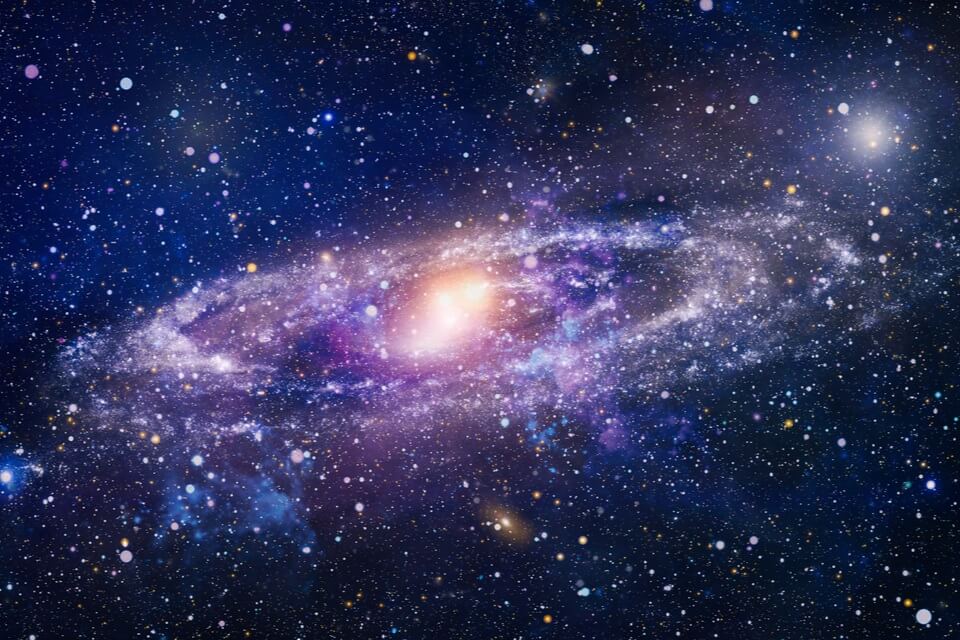
Exploring the Cosmic Connection: How Your Wi-Fi Router Mirrors the Structure of the Milky Way
When we consider the vastness of the universe, it’s intriguing to find parallels between celestial structures and our daily technology. Our Wi-Fi router, often overlooked, can be seen as a miniature model of the Milky Way. Just as the Milky Way is structured with a central hub—the supermassive black hole—our Wi-Fi router serves as the core from which signals are emitted. This core, much like the gravitational center of the galaxy, influences how far and wide the connections can reach, impacting our ability to access the internet at high speeds.
Moreover, the distribution of data signals from a Wi-Fi router unfolds in a spiral pattern, reminiscent of the beautiful arms of the Milky Way. These arms carry stars, planets, and other celestial bodies, whereas our router sends data packets that allow devices to connect seamlessly. By understanding this cosmic connection, we realize that the structure of the universe is echoed in our everyday lives, reminding us that technology and nature are intertwined in ways we often overlook.
Counter-Strike is a popular tactical first-person shooter game that has garnered a massive following since its inception. Players engage in team-based combat, often focusing on objectives such as bomb planting or hostage rescue. For those looking to enhance their gaming experience, you might be interested in the Top 10 Samsung Galaxy Accessories that can elevate your setup and performance.
Data Transmission in the Galaxy: What Your Router Can Teach Us About Cosmic Connectivity
In the vast expanse of the universe, data transmission mirrors the intricate connections of our digital world. Just as your router facilitates seamless communication between devices at home, cosmic connectivity ensures that celestial objects, like stars and galaxies, exchange information across light-years. The science behind data transmission in the galaxy involves a complex interplay of electromagnetic waves, similar to the Wi-Fi signals your router emits. These waves allow for the transfer of energy and information, akin to how your router shares data packets with multiple devices. Understanding these cosmic networks not only enriches our knowledge of the universe but also highlights the remarkable parallels between terrestrial and celestial communication systems.
Moreover, the study of cosmic connectivity offers insights into the parameters that govern data transmission. In our galaxy, factors such as distance, frequency, and environment play crucial roles in the efficiency of information transfer. For instance, just as a router's range can be limited by obstacles, cosmic signals may face interference from dust clouds or gravitational forces. The evolution of routers involved adapting to limitations, such as increasing bandwidth or improving signal strength—similar adaptations can be observed in the methods used to optimize data flow across the universe. By examining these parallels, we can better appreciate the importance of connectivity, both in our homes and throughout the cosmic landscape.
Are Your Internet Speeds Influenced by Galactic Phenomena? A Look at Wi-Fi and the Milky Way
When we think about the factors affecting our internet speeds, we often focus on terrestrial elements like bandwidth, server proximity, and network congestion. However, fascinatingly, there is a school of thought suggesting that galactic phenomena might also play a role in our internet connectivity. While it may sound far-fetched, certain theories propose that cosmic events, such as solar flares or other interstellar activities, could interfere with electromagnetic signals, including Wi-Fi. For instance, during periods of intense solar activity, disruptions in Earth’s magnetic field might momentarily impact satellite communications and, subsequently, our internet connections.
Understanding the potential impacts of these galactic events requires a closer look at the intricate dance between physics and technology. Some studies suggest that when solar flares occur, they can lead to fluctuations in the speed and reliability of internet services. Network engineers and astronomers alike have begun to explore this unusual intersection, leading to intriguing discussions about how the vastness of the Milky Way and its activities might extend their reach into our daily digital lives. As our dependence on the internet grows, recognizing these connections could be key to ensuring better connectivity and preparing for the unexpected sways of the universe.